Context & problem
Knowing where you actually stand.
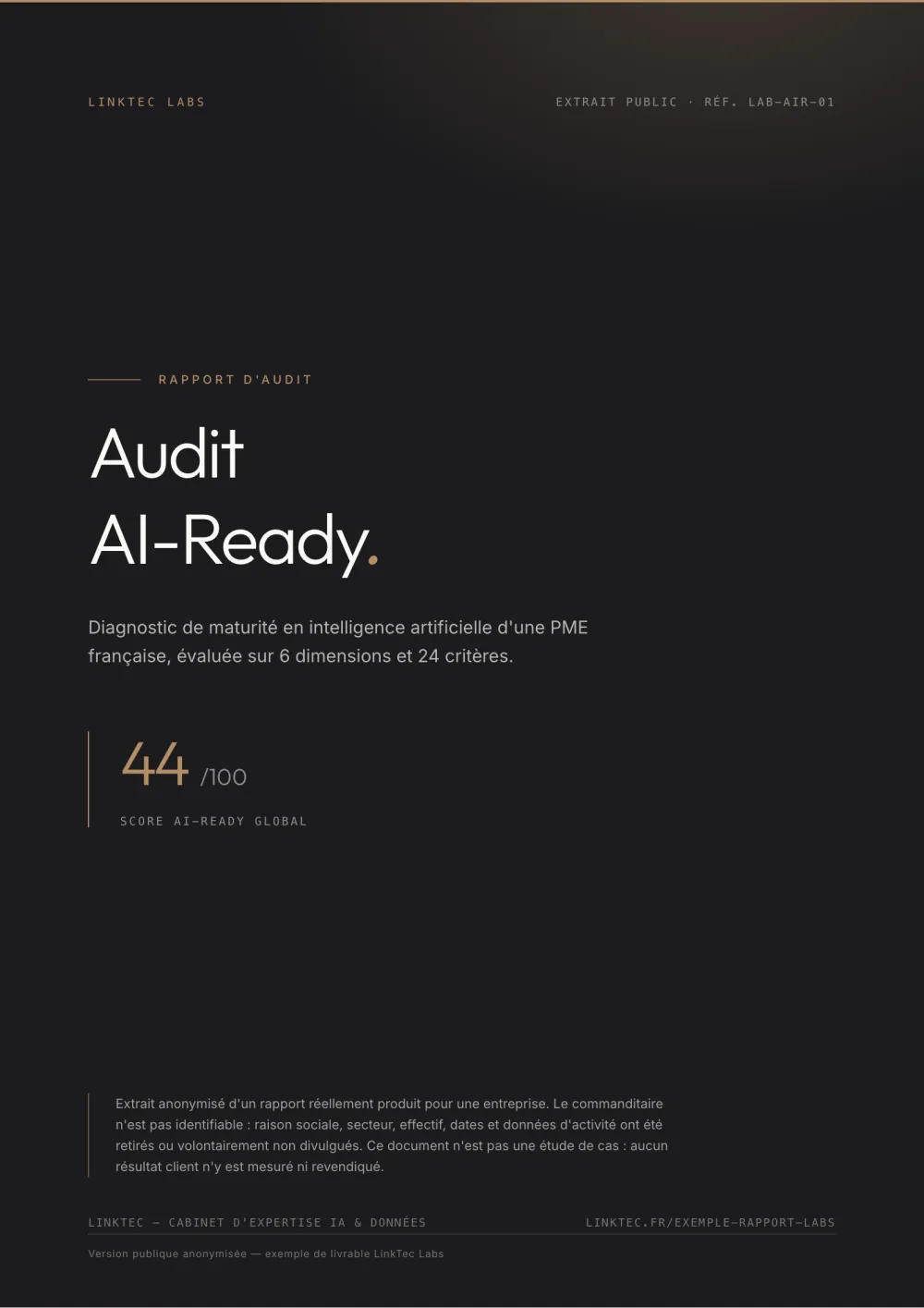
The client is a French SME. Its sector, size and location are deliberately withheld: those are precisely the details that would make it recognisable.
The question asked was the one most business owners are asking today: where do we start with AI — and is this even the right time? AI projects in SMEs rarely fail for technical reasons. They fail because the data cannot be mobilised, because processes are not measured, or because nobody internally owns the subject.
So the audit does not set out to sell a technology. It establishes a factual picture, scores what is in place, and states what must be consolidated before investing.
Method & deliverables
Six dimensions, twenty-four criteria.
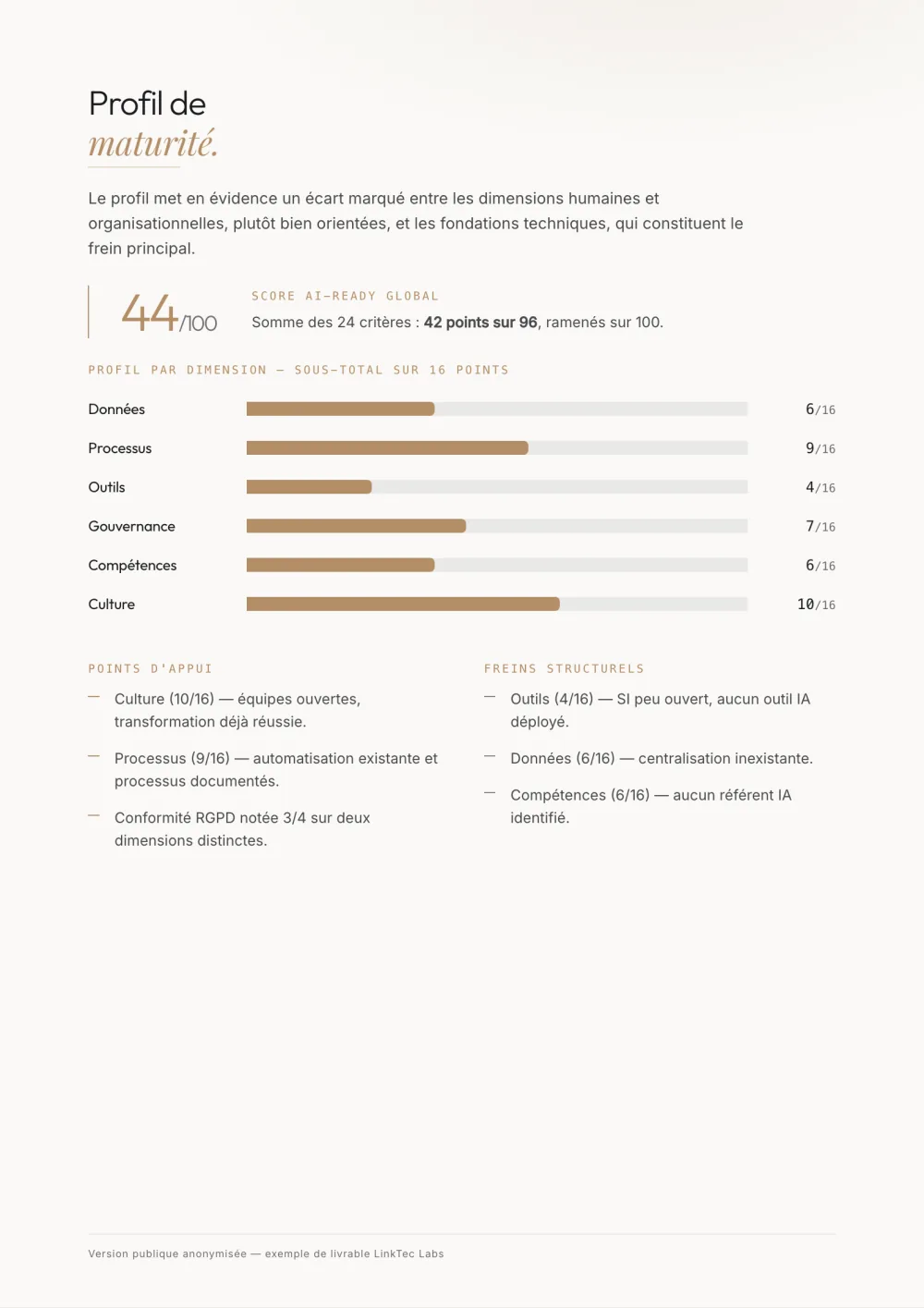
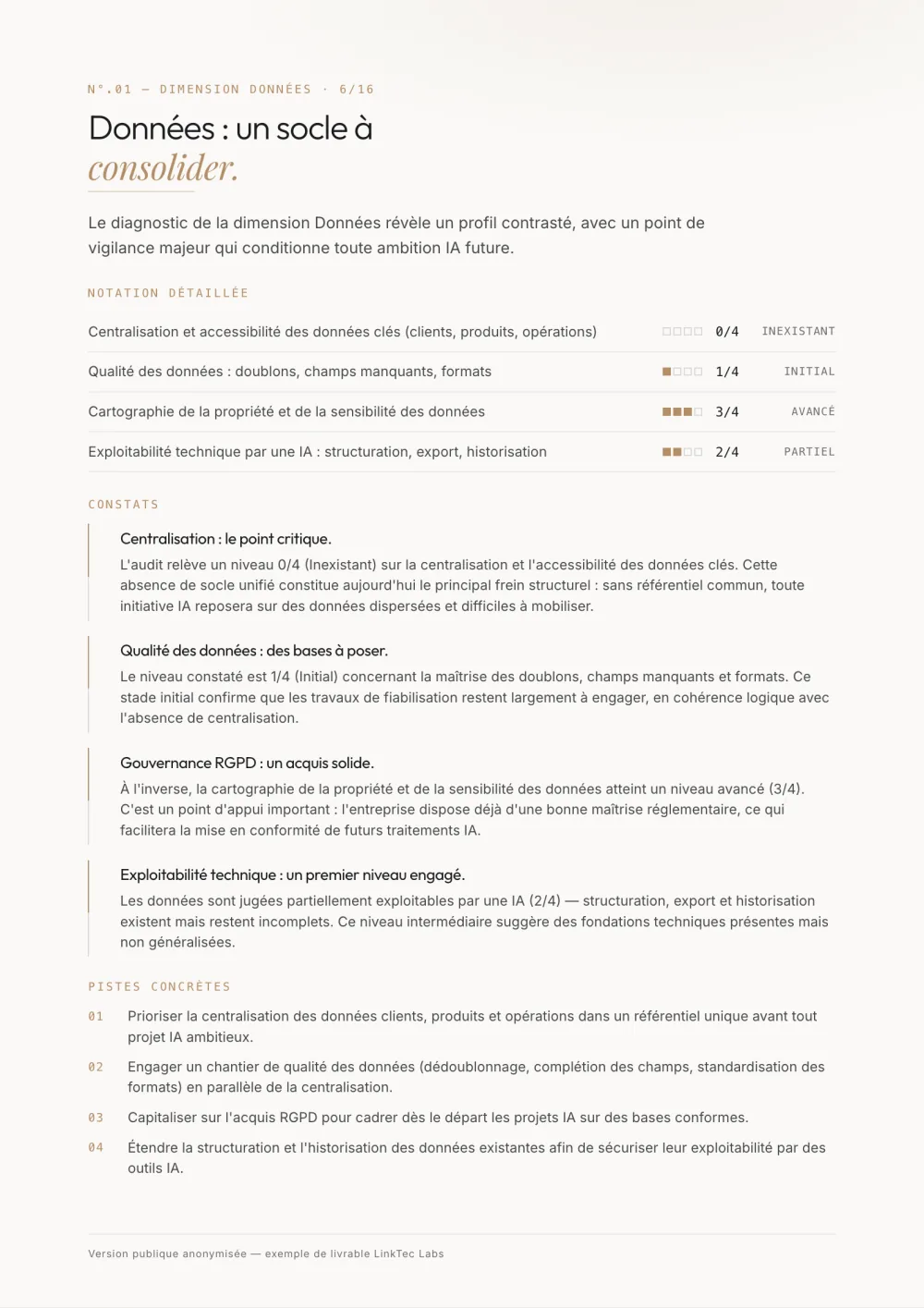
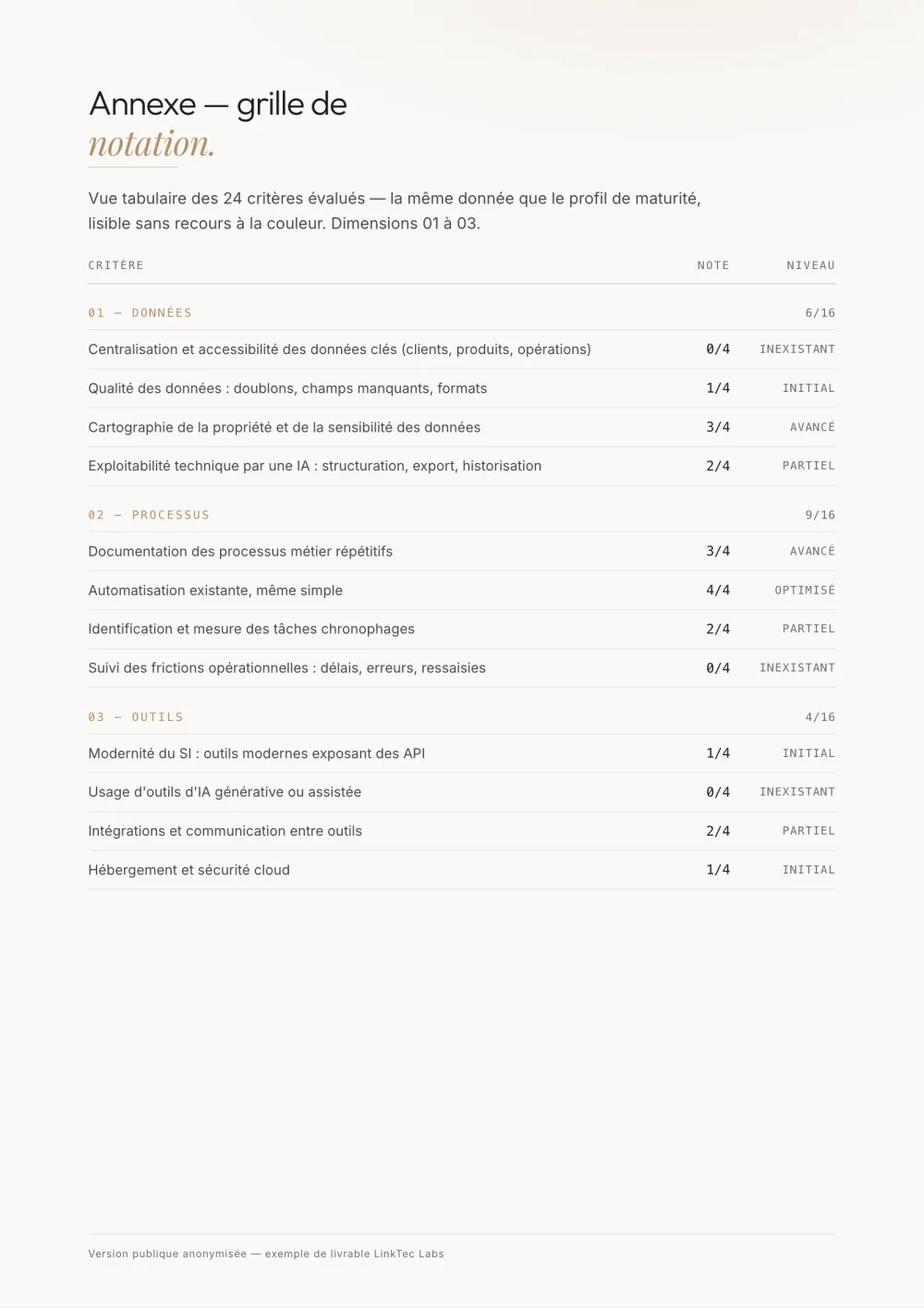
Each dimension — Data, Processes, Tools, Governance, Skills, Culture — is scored on four criteria, each rated from 0 (Non-existent) to 4 (Optimised). The overall score is the sum of the 24 ratings, brought back to 100.
Scores are based on interviews and on a review of the material the company provides. Where a point was not covered, the report says so explicitly rather than estimating it — that is a constant drafting principle.
The AI-Ready audit format is scoped over 2 to 3 weeks.
- An AI maturity score out of 100, broken down by dimension.
- A detailed rating of the 24 criteria, with the level reached for each.
- Written findings, dimension by dimension, grounded in the scores.
- Concrete, prioritised recommendations for each dimension.
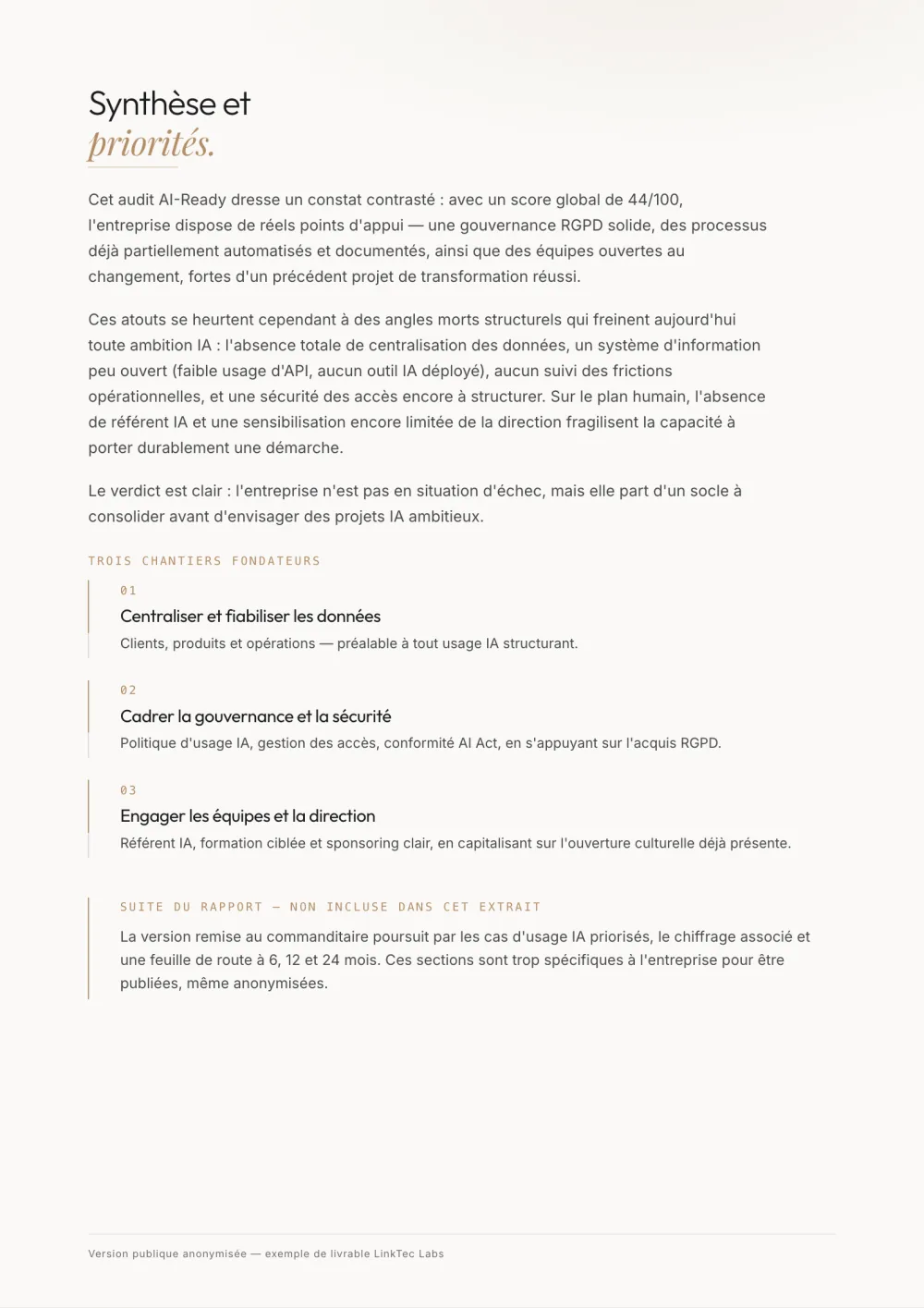
- A synthesis setting out the foundational workstreams.
- In the full version: prioritised use cases, budget estimates and a 6/12/24-month roadmap — not included in this public extract.
The report itself is in French. This page summarises its content and method in English; the PDF has deliberately not been re-typeset, so that what you download is exactly the document that was produced.